Thursday, April 29, 2010

Kermit and Sacajawea


The chilly spring wind whipping off the Columbia River inspired Ezra to bundle up, and then take flight. She's soaring in several Dax Alpaca garments and accessories. The green cardigan with cabling and honeycomb stitch is called the "Kermit." This is a unisex style and is 100% alpaca. The golden-hued scarf about her neck is handloomed in Bolivia of 100% alpaca (dimensions 25" x 84"). Finally, she keeps some ballast in her handbag- handmade of strips of homespun woolen cloth woven together to form a mosaic. We are excited about springtime!

Thursday, April 15, 2010

Python Hat

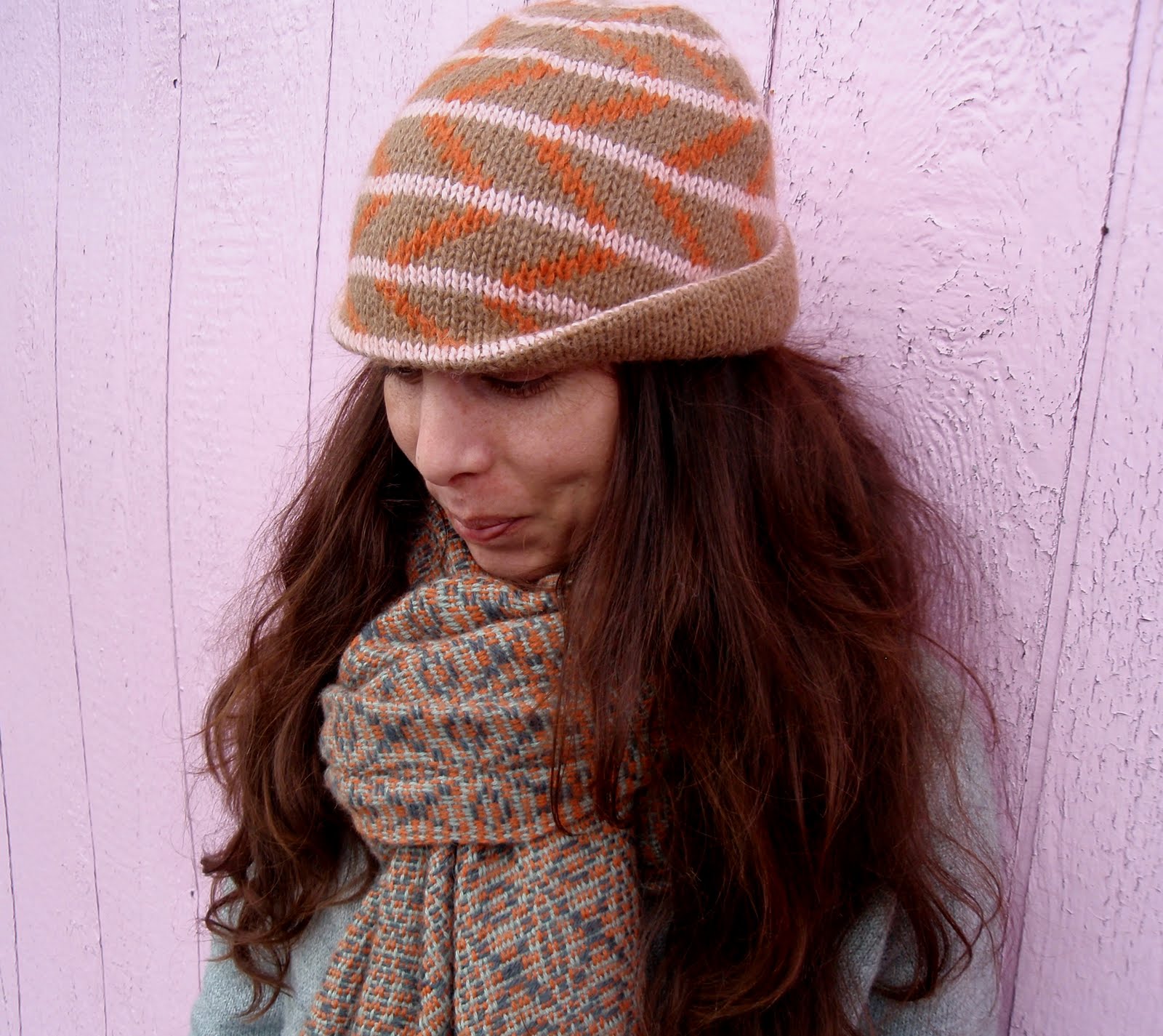
This is the Python Hat. It's one of our most popular styles over the last few years. This is one of our new colorways that Ezra and I designed together. In the photo, Ezra combines the Python Hat with a brocade shawl by Lucas (see post from March 9). This hat is knitted double thickness, so it is very warm (and soft, of course). It is also great for guys!

Wednesday, March 31, 2010

Sugar Glider Sweater


This is the Sugar Glider Sweater. It has an unusual and intriguing shape since it's knitted sideways. Cabling, applique and honeycomb stitches create yummy textures. Made with a double thick 100% alpaca yarn, this sweater is as warm as it is comfortable. This was a collaborative design by Ezra Descarfino and Dax Alpaca. (model Ezra D.)

Monday, March 22, 2010

Rubi Poncho


This is a very simple, lightweight poncho made of 100% alpaca. The one in the photo was made with a special space-dyed yarn (hard to come by, alas), which gives it a subtle, striped effect. Springtime is the right time to wear this poncho. We have some new colors on the way- marled teal, berry, black. Retail price is about $80.

Thursday, March 11, 2010

Ariana Dress


This is a gorgeous 100% baby alpaca knit dress. We make this design with a knitting workshop in Arequipa, Peru. The knitter, Patricia, has an elegant, feminine sense of style. She sends lots of fine alpaca garments to customers in France and Italy. The Ariana dress is very classy, with nice lines and slimming rib details.

Wednesday, March 10, 2010

Crochet Gloves


These crochet gloves are each handmade by skilled artisans in Lima, Peru, using 100% alpaca. In addition to being very warm (of course, they're made of alpaca) and soft, they are very durable. I noticed that knitted gloves would often wear holes in the fingertips after a season or two. This is a shame because alpaca garments last for many years and still retain a new appearance. We started making these crocheted gloves a couple of years ago with a group of artisans in Lima. They first caught my eye because the stitches are small and dense- good properties for keeping out the wind. When the first batch arrived, Ezra nabbed a pair for "product testing"- that's how she justifies it- and even after a year of hard wear (she rides her bike to work) they show no holes, pills or thin spots. We make size M and L. The price is $45. Assorted solids and stripes.

Tuesday, March 9, 2010

warping in Juliaca


Before my trip to Peru, Ezra and I began the design process for the scarves, shawls and blankets that Lucas agreed to weave for us. I guided her on technical aspects of this style of weaving, and she selected a color palette from a stock of alpaca yarn and then combined different colors for each design. Our knitters in Lima had sent the yarn to Lucas a few days before my arrival, so the stage was set to begin setting up the looms for weaving. I communicated the designs to the weavers using sketches which indicated the different warps, wefts and weaving patterns for each set of textiles. We wove twenty scarves, ten shawls and ten throws per warp. This was the easy part, as Lucas and I had been through this same process countless times during our many years of collaboration in Bolivia.
See Lucas and Felipe giving a demonstration on the warping tree. The cones of alpaca yarn are threaded onto the warping tree, which is rotated a certain number of times depending on the size and number of textiles you plan to weave. From here, the yarns are removed from the warping tree and threaded onto the loom as the warp. In the other photo, Lucas is seen sitting at his loom. The white yarn on the right is the warp, passing through the heddles and then the beater. He opens a shed by pressing the treadles with his feet and passing the weft through the shed. He tightens this "pick" with the beater (which is hinged to the base of the loom), and then proceeds to open the next shed for the next pick.
We are currently working on another round of handloom textiles with Lucas and Co.